
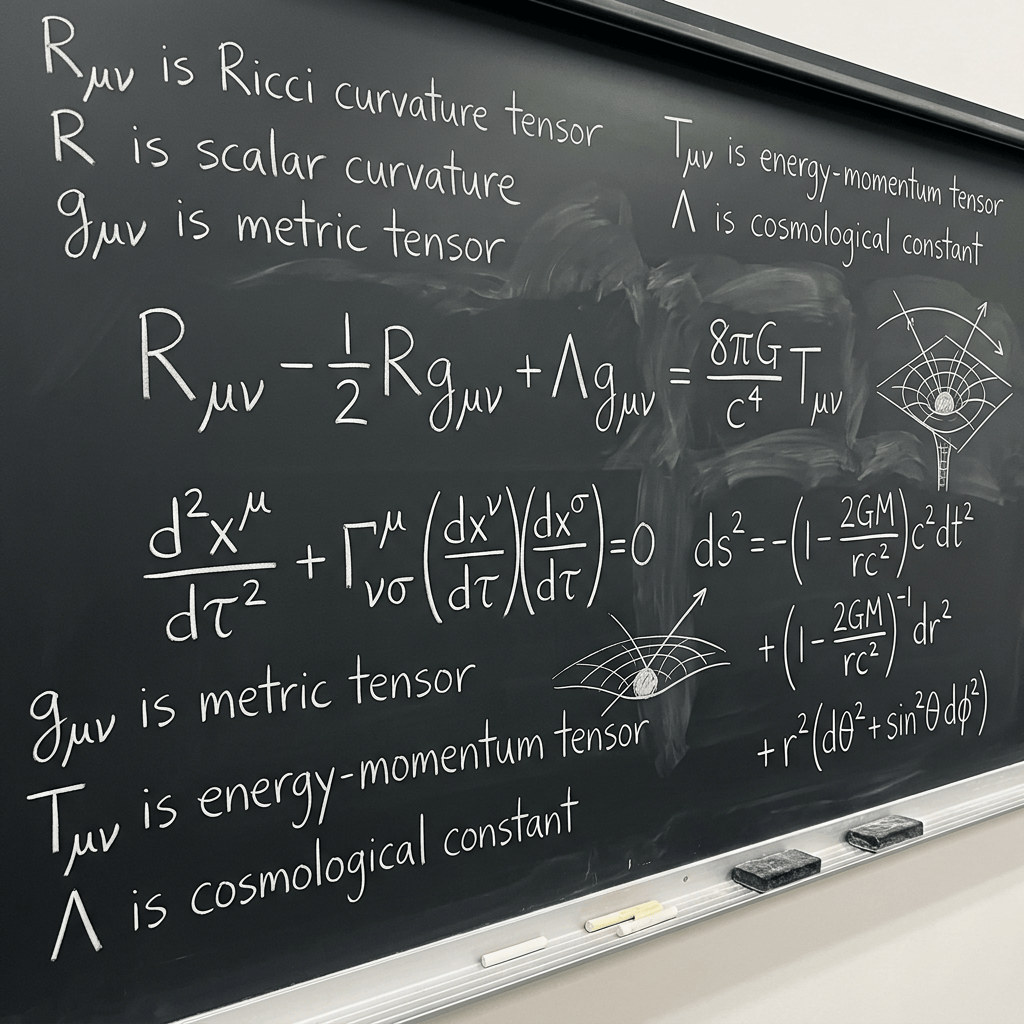
Dr. Pronab K. Chowdhury justifies his claim that General Relativity was a “useless theory” for 50 to 60 years after its creation by arguing that it lacked practical application, was ignored by mainstream scientists, and addressed problems that were marginal to the actual progress of
physics.
His justifications include the following:
● Irrelevance to Essential Physics: The author characterizes General Relativity as a “Makal fruit” —a metaphor for something that looks attractive but is useless inside 1-3. He argues that while the scientific community was solving the urgent mysteries of atomic structure and the nucleus, Einstein was focused on a “pet project” that held no value for these fundamental breakthroughs 1, 4.
● Marginal Phenomena: Chowdhury asserts that General Relativity only provided descriptions for two “completely unimportant” cosmic processes: the deflection of light
near the sun and the perihelion shift of Mercury 1. He claims these did nothing to advance human welfare or the broader field of physics during Einstein’s lifetime 5.
● Scientific Disinterest and Isolation: The author notes that for nearly six decades, General Relativity was largely ignored by the mainstream scientific community 6. He highlights that the theory was not even a subject of discussion at the prestigious Solvay Conferences until 1973, roughly 60 years after its inception 6. Enthusiastic engagement with the theory only revived significantly after 1974 due to the work of Stephen Hawking
3.
● Minimal Technological Impact: Within his framework, the author posits that if General Relativity had never been created, the only significant technological loss today would be GPS 7. He suggests that human civilization would have been technologically backward by at most one decade without it, while the absence of Quantum Mechanics would
have set civilization back at least 50 years 7, 8.
● A “Solo Exhibition” for Fame: Chowdhury argues that the theory’s primary “use” was not scientific, but rather as a “solo exhibition” to build Einstein’s personal brand 9, 10.
He claims it was utilized as a tool for a “calculated Zionist media campaign” to establish Einstein as a global icon of genius, distracting from the fact that he was no longer
producing viable science 9, 11.
In summary, the author justifies his stance by framing General Relativity as a mathematically complex but practically empty theory that was kept alive by media hype rather than its utility to the scientific progress of the 20th century 2, 11.

