
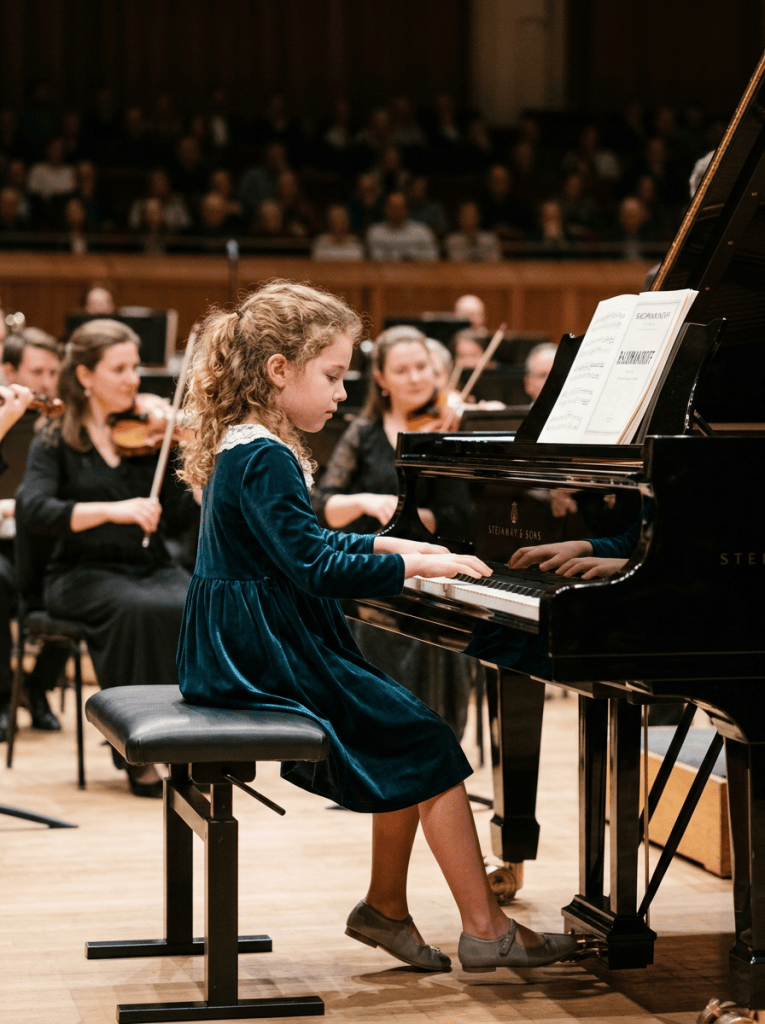
Is Einstein a child prodigy?
Dr. Pronab K. Chowdhury justifies his claim that Albert Einstein showed no record of creative genius during his formative years by contrasting Einstein’s early life with recognized child prodigies and highlighting a consistent pattern of academic mediocrity and professional failure.
The author breaks down this justification into three distinct life stages:
- Childhood: Lack of Objective Proof
The author argues that while Einstein is often posthumously celebrated as a “child prodigy,” there is no preserved evidence of extraordinary achievement during his early schooling 1, 2.
● Contrast with True Prodigies: Chowdhury compares Einstein to figures like Carl Friedrich Gauss, who corrected his father’s arithmetic at age three, and Wolfgang Amadeus Mozart, who was composing and performing for royalty by age six 3, 4. He notes that no such record of external recognition exists for Einstein 5.
● Reliance on Subjective Memoirs: The author points out that the only “evidence” of Einstein’s early genius comes from the subjective memories of Einstein himself or his sister, Maria (Maja) 5. For instance, while Einstein recalled the “deep impression” of a compass at age five, the author notes that James Clerk Maxwell had already scientifically solved the mystery of magnetism decades earlier, implying that Einstein’s private realization was not a unique historical breakthrough 6, 7.

